
Swim Training Zones Calculator
Calculate your swim training zones from CSS or threshold pace. Structure your pool intervals by Zone 1–5 intensity for aerobic base, threshold, and VO2max work.
Common Race Pace Chart
| Time | Pace (min/km) | Pace (min/mi) |
|---|---|---|
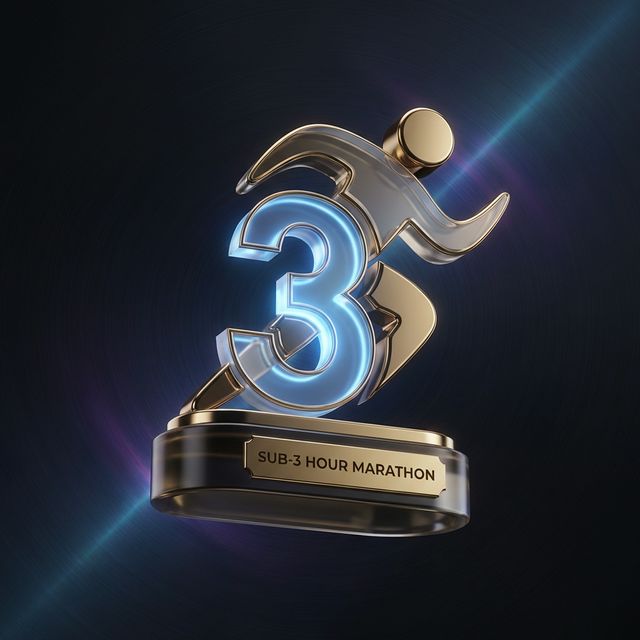
| Marathon Sub-3 | 4:16 | 6:52 |
| Marathon Sub-3:30 | 4:58 | 8:00 |
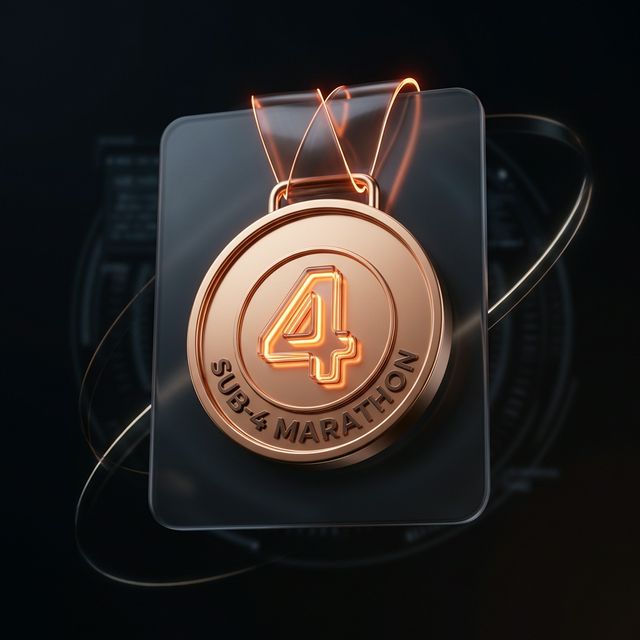
| Marathon Sub-4 | 5:41 | 9:09 |
| Half Sub-1:30 | 4:15 | 6:51 |
| Half Sub-2:00 | 5:41 | 9:09 |
| 10K Sub-40 | 4:00 | 6:26 |
| 5K Sub-20 | 4:00 | 6:26 |
Specialized Versions


Scientific Methodology & Accuracy
Our tools are built using peer-reviewed research and industry-standard formulas. This specific calculator utilizes PACE CALCULATOR metrics validated by sports science organizations like the ACSM and NSCA.
The IOC consensus statements provide the most broadly accepted guidelines for nutrition and supplement use.
Performance Concept
"Elite athletes rely on data to eliminate uncertainty and maximize every training session."
Expert Protocol
"Periodization of your intensity allows for supercompensation and prevents localized overtraining. Relying solely on external data points without internal bio-feedback can lead to psychological burnout."
Embed This Tool
<iframe src="https://winsportsus.com/tools/swimming/swim-training-zones-calculator" width="100%" height="800" frameborder="0" style="border-radius: 12px; box-shadow: 0 4px 6px rgba(0,0,0,0.1);"></iframe>
<div style="font-size: 12px; color: #888; margin-top: 8px; text-align: center;">Powered by <a href="https://winsportsus.com/tools/swimming/swim-training-zones-calculator" target="_blank" style="color: #D4705A; text-decoration: none;">WinSportsLab</a> </div>
Want to add this calculator to your own website? Simply copy the code above and paste it into your HTML. It's free!
How to Use This Tool
- 1
Enter your current fitness metrics and goal parameters into the Swim Training Zones Calculator.
- 2
Review the calculated outputs and compare against your current training performance to assess the gap.
- 3
Integrate the results into your next training plan by setting specific weekly targets based on the data.
- 4
Reassess inputs every 4–6 weeks to ensure your calculations reflect your current fitness level accurately.
Key Terminology
Frequently Asked Questions
Q1 How do I improve my pace per 100m?
Focus on Distance Per Stroke (DPS) first, then stroke rate. Practice catch-up drill and fingertip drag drill to improve DPS. Use the SWOLF score as your feedback mechanism. Once technique is consistent, add sprint intervals to build speed on top of efficiency.
Q2 How should I pace a 400m freestyle race?
The optimal 400m pacing strategy is slightly negative splitting: swim the first 100m at 2% above target average pace, maintain target for the middle 200m, and build to 3–5% above target for the final 100m. Avoid going more than 5% faster in the opening 100m.
Q3 How does pool swimming pace translate to open water?
Typically, open water pace is 5–15% slower than pool pace due to absence of push-offs, sighting effort, waves, and wetsuit variability. For a triathlon swim segment, add 10% to your pool 1500m time as a baseline estimate.
Q4 What kick frequency should I use in freestyle?
For sprint events (50–100m): 6-beat kick for maximum propulsion. For middle distance (200–400m): 6-beat or 4-beat based on preference. For long-distance and triathlon: 2-beat kick to conserve energy for the bike and run segments.
Critical Swim Speed (CSS): Your Swimming Threshold
CSS is the theoretical maximum pace you could sustain indefinitely — analogous to lactate threshold in running or FTP in cycling. It's calculated from a 400m and 200m time trial:
``
CSS = (400m distance - 200m distance) ÷ (400m time - 200m time)
``
Result expressed as pace per 100m. Research (Wakayoshi et al., 1992) established CSS as the pace corresponding to maximal lactate steady state — the boundary between sustainable and unsustainable effort.
The 5-Zone Swim Training Model
| Zone | % of CSS | Energy System | Perceived Effort |
|---|---|---|---|
| Z1 — Recovery | < 80% | Aerobic fat | Very easy, conversational |
| Z2 — Aerobic Base | 80–90% | Aerobic mixed | Easy, sustainable hours |
| Z3 — Tempo | 90–100% | Lactate threshold | Comfortably hard |
| Z4 — Threshold | 100–110% | Anaerobic glycolytic | Hard, unsustainable > 20 min |
| Z5 — VO2max | > 110% | Maximal oxygen | Very hard, 2–8 min efforts |
Recommended Weekly Zone Distribution
For aerobic base development (polarized model): - Zone 1–2: 80% of total volume - Zone 3: 5% (minimize — metabolic "grey zone") - Zone 4–5: 15% (quality sessions)
ℹ️ Note
CSS deteriorates faster than cycling FTP if not retested. Reassess every 6–8 weeks during build phases.
Use Cases / Example Scenarios
Monitor distance per stroke over a 6-week technique cycle to quantify improvements from catch-up drills and fingertip drag work.
Use your current lap pace to set altitude training targets, accounting for the 3–5% performance reduction expected at 2,000m above sea level.
Input your 100m test time to generate pacing for 400m, 800m, and 1500m events using optimal negative-split progression.
Measure your SWOLF score at different speeds to find the stroke rate / DPS combination that minimizes your score at race pace.
Related Guides
Related Tools
View All Tools →
Swimming Calorie Calculator
Estimate calories burned swimming based on stroke, pace, and body weight.

Ideal Weight Calculator
Find your medically recommended healthy weight range based on height and gender.
VO2 Max Estimator (Cooper Test)
Estimate your VO2 Max and cardiovascular fitness level using the 12-Minute Run Test (Cooper Test).
US Army AFT Score Calculator (formerly ACFT)
Calculate your Army Fitness Test (AFT) score — the test that replaced the ACFT. Deadlift, Hand-Release Push-Ups, Sprint-Drag-Carry, Plank, 2-Mile Run.