10K in 1h 30m for 60s Women: Pace & Age-Adjusted Plan | Training Guide
[Spring 2026] Women ages 60-70 targeting a 1h 30m 10K? See exact pace (km/mile), age-adjusted VO2 Max context, gender-specific injury risks, and a training plan. Master your fitness with our 10k pace 1 hour 30 min 60s female analytics.
Specialized Versions

Scientific Methodology & Accuracy
Our tools are built using peer-reviewed research and industry-standard formulas. This specific calculator utilizes PACE CALCULATOR metrics validated by sports science organizations like the ACSM and NSCA.
Metabolic cart testing remains the gold standard for determining fuel utilization at various intensities.
Performance Concept
"The leap from amateur to elite is often a matter of mastering the minor details revealed by data."
Expert Protocol
"Utilize contrast water therapy to accelerate the removal of metabolic byproducts after high-intensity blocks. Rapid increases in volume (over 10% per week) are the primary cause of overuse injuries."
Embed This Tool
<iframe src="https://winsportsus.com/tools/running/10k-pace-1-hour-30-min-60s-female" width="100%" height="800" frameborder="0" style="border-radius: 12px; box-shadow: 0 4px 6px rgba(0,0,0,0.1);"></iframe>
<div style="font-size: 12px; color: #888; margin-top: 8px; text-align: center;">Powered by <a href="https://winsportsus.com/tools/running/10k-pace-1-hour-30-min-60s-female" target="_blank" style="color: #F43F5E; text-decoration: none;">WinSportsLab</a> </div>
Want to add this calculator to your own website? Simply copy the code above and paste it into your HTML. It's free!
How to Use This Tool
- 1
Enter your goal race distance and target finish time into the 10K in 1h 30m for 60s Women: Pace & Age-Adjusted Plan.
- 2
Review the calculated pace per kilometer and per mile to confirm it aligns with your current training capacity.
- 3
Cross-reference with your recent long run pace. If the target is 15+ sec/km faster, build gradually over 8–12 weeks.
- 4
During your next marathon-pace (MP) workout, use this pace to build neuromuscular memory for race day execution.
Key Terminology
Frequently Asked Questions
Q1 How accurate is a running pace calculator for marathon planning?
Q2 What pace do I need to run a sub-3 hour marathon?
Q3 How does temperature affect my running pace?
Q4 What is the 10% rule for increasing mileage?
10K in 1h 30m: 60s Women
#### Hormonal & Physiological Context Estrogen and progesterone cycles in women in their 50s and beyond (post-menopause), where estrogen loss accelerates bone resorption—calcium (1,200mg/day) and Vitamin D (2,000 IU/day) supplementation is evidence-backed.
#### Heart Rate Training Zones Estimated max HR for a 65-year-old woman: 148.8 bpm (Gulati formula for women).
For a 1h 30m 10K effort, your race-day heart rate will average approximately 136–146 bpm (88–94% Max HR).
#### VO2 Max Trajectory Female VO2 Max values average 10–15% lower than males at the same fitness level due to differences in hemoglobin concentration and cardiac output. However, women post-menopause show a more rapid decline without hormonal support, making consistent training non-negotiable.
#### Age & Gender-Specific Injury Prevention Primary injury risks for female runners in their 60-70: Osteoporosis-related stress fractures; avoid rapid volume increases and prioritize impact-modifying footwear.
#### Training Adjustments for 60-70 Women Athletes in this demographic achieve the best 10K results by: - Limiting high-intensity sessions to 2 per week - Ensuring 60–72 hours of recovery between hard efforts - Incorporating pelvic floor and hip abductor strength work 2×/week
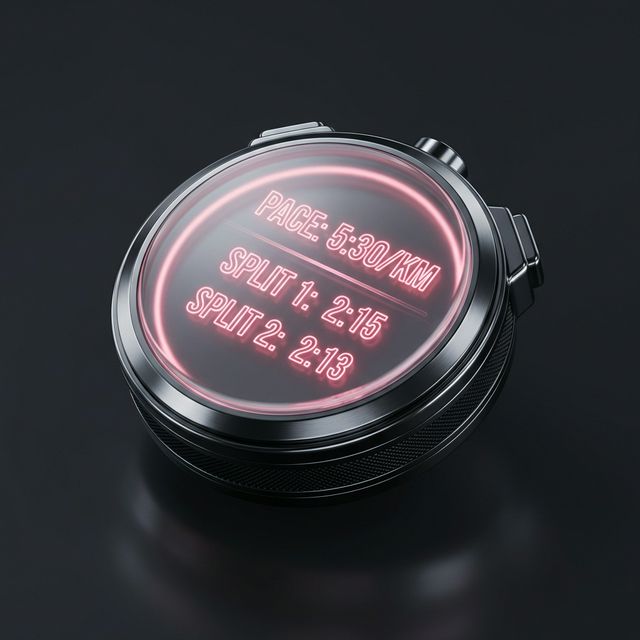
#### Required Pace Use the calculator to confirm your exact splits per kilometer and mile for a 1h 30m finish.
Performance Tier Analysis
- Glycogen stores provide ~1,600–2,000 kcal of energy — sufficient for 90–120 minutes at marathon pace. Fuel with 30–60g carbs every 45–60 min to delay depletion.
- At marathon pace, caloric burn is approximately 65–80 kcal/km. A 70kg runner expends ~2,960 kcal over 42.195 km.
Scientific Verification
Use Cases / Example Scenarios
When ambient temperature exceeds 15°C, use the calculated pace to apply a 60-sec/hour slowdown for realistic warm-weather goal-setting.
Enter your recent 5K or 10K result to project a realistic marathon or half marathon finish time using the Daniels VDOT method.
Confirm your target pace hasn't drifted during a 3-week taper by running a controlled 5km at goal pace with heart rate monitoring.
Use this tool to set your A/B/C goal paces and build a 3-scenario race day execution plan with per-km split cards.
Apply the output to find your lactate threshold pace and design progressive tempo sessions that build sustainable speed.
Related Tools
View All Tools →10K in 1h 10m for 50s Men: Pace & Age-Adjusted Plan
Physiology-backed 10K pacing guide for male runners ages 50-59. Includes age-graded HR zones, injury risk profile, and a 1h 10m training blueprint.
Is a 135 lb Deadlift Good for a 270 lb man?
Find out what a 135 lb Deadlift means for someone weighing 270 lbs. Includes strength level, percentile, and training tips.
Is a 135 lb Deadlift Good for a 270 lb woman?
Find out what a 135 lb Deadlift means for someone weighing 270 lbs. Includes strength level, percentile, and training tips.
Is a 185 lb Deadlift Good for a 130 lb man?
Find out what a 185 lb Deadlift means for someone weighing 130 lbs. Includes strength level, percentile, and training tips.