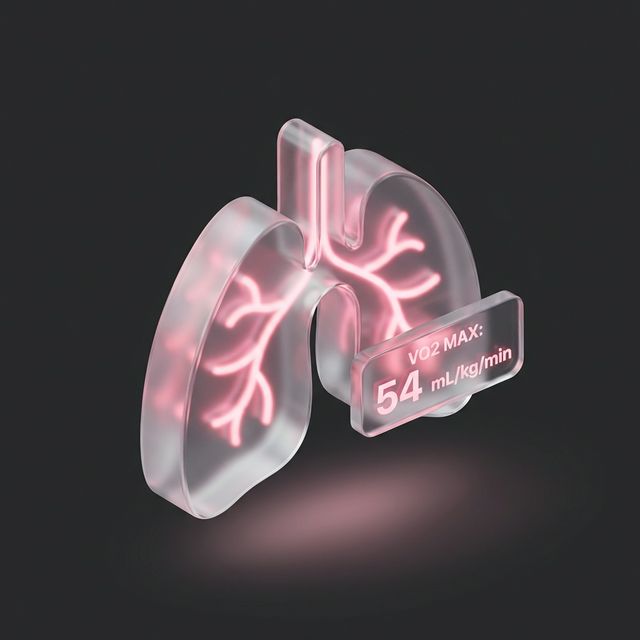
Cycling VO2 Max Calculator
Estimate cycling VO2max from your FTP or 20-minute power test. Compare to cycling performance standards and calculate your aerobic training zones.
Specialized Versions

Scientific Methodology & Accuracy
Our tools are built using peer-reviewed research and industry-standard formulas. This specific calculator utilizes POWER CALCULATOR metrics validated by sports science organizations like the ACSM and NSCA.
Modern exercise physiology emphasizes the importance of calculating individual thresholds for optimal zone management.
Performance Concept
"Achieving your peak performance requires more than just hard work—it requires precision data."
Expert Protocol
"Varying your training surfaces (trail vs. road) can reduce the risk of repetitive stress injuries. Extreme dieting while high-volume training often leads to hormonal imbalance and burnout."
Embed This Tool
<iframe src="https://winsportsus.com/tools/cycling/cycling-vo2max-calculator" width="100%" height="800" frameborder="0" style="border-radius: 12px; box-shadow: 0 4px 6px rgba(0,0,0,0.1);"></iframe>
<div style="font-size: 12px; color: #888; margin-top: 8px; text-align: center;">Powered by <a href="https://winsportsus.com/tools/cycling/cycling-vo2max-calculator" target="_blank" style="color: #D4705A; text-decoration: none;">WinSportsLab</a> </div>
Want to add this calculator to your own website? Simply copy the code above and paste it into your HTML. It's free!
How to Use This Tool
- 1
Enter your recent race time or Cooper 12-minute run result into the Cycling VO2 Max Calculator.
- 2
Compare your estimated VO2 Max against age-group norms to establish your current aerobic fitness baseline.
- 3
Set training pace targets at 90–95% of VO2 Max intensity for 3–8 minute intervals to improve this metric.
- 4
Retest every 3 months. VO2 Max is highly trainable in the first 2 years of structured endurance training.
Key Terminology
Frequently Asked Questions
Q1 How do I calculate my FTP from a 20-minute test?
Perform a 20-minute all-out time trial after a proper warm-up. Multiply your average power by 0.95 to estimate your 60-minute FTP. The 5% deduction accounts for the difference between 20-minute and 60-minute maximum efforts.
Q2 What W/kg ratio do I need to be competitive?
Category 4 racers average 2.5–3.0 W/kg FTP. Category 1–2 racers maintain 4.0–5.0 W/kg. Professional cyclists are at 5.5–6.5 W/kg. For group ride leaders, aim for 3.0+ W/kg.
Q3 How does cadence affect cycling performance?
Higher cadence (85–100 RPM) shifts effort from muscles to the cardiovascular system, reducing local muscular fatigue on long rides. Lower cadence (<70 RPM) increases torque demands and knee joint stress. Most coached cyclists aim for 85–95 RPM.
Q4 How do I calculate speed from gear ratio and cadence?
Speed (km/h) = (chainring teeth ÷ cassette teeth) × wheel circumference (m) × cadence (RPM) × 0.06. A 50×17 gear at 90 RPM with a 2.1m wheel circumference produces approximately 33.5 km/h.
Cycling VO2 Max: Why It Differs from Running
VO2 max in cycling is typically 5–8% lower than running VO2 max in the same individual. Cycling is a non-weight-bearing sport — fewer muscle groups are activated against gravity, reducing total oxygen demand. Elite cyclists often have running VO2 max values 5–10 mL/kg/min higher than their cycling equivalent.
Estimation formula from FTP:
``
VO2max ≈ (FTP in W/kg × 10.8) + 7
``
This equation (adapted from Hawley & Noakes, 1992) has been validated in trained cyclists and produces results within ±5 mL/kg/min of laboratory measures.
VO2 Max Reference Ranges for Cyclists
| Level | Male (mL/kg/min) | Female (mL/kg/min) |
|---|---|---|
| Recreational | 40–50 | 35–44 |
| Trained | 55–65 | 48–58 |
| Well-trained | 65–75 | 58–68 |
| Elite | 75–85+ | 68–78+ |
Practical Use: Targeting Zone Development
VO2 max work targets 105–120% of FTP and should be performed in 3–8 minute intervals with equal recovery. Research (Billat, 2001) shows time-at-VO2max is maximized with 1:1 work-to-rest ratios at 100–105% of vVO2max.
ℹ️ Note
Laboratory VO2 max tests require metabolic carts and are the gold standard. Calculator estimates are approximations for training planning only.
Use Cases / Example Scenarios
After a 20-minute all-out effort, use this tool to calculate your FTP and automatically set all 7 Coggan training zones.
Input your power output, body weight, and gradient to project your VAM (meters/hour) and compare to segment benchmarks.
Identify the optimal chainring/cassette combination for your target cadence (85–95 RPM) on your most common terrain.
Calculate sustainable race watts to prevent early fatigue. Stay at 88–93% FTP (Sweet Spot) for events over 90 minutes.
Related Tools
View All Tools →
Bike Gear Ratio Calculator
Calculate gear ratios, gear inches, and speed at cadence for road, MTB, and gravel bikes.
Marathon Fueling Calculator
Calculate gel timing, carb targets, and hydration strategy for your marathon finish time.
Rowing Pace Calculator
Convert 2K row time to training zone splits, watts, and pace targets for indoor rowing.

Protein Intake Calculator
Find out exactly how much protein you need per day to build muscle, lose weight, or maintain health.