What Is VO2 Max?
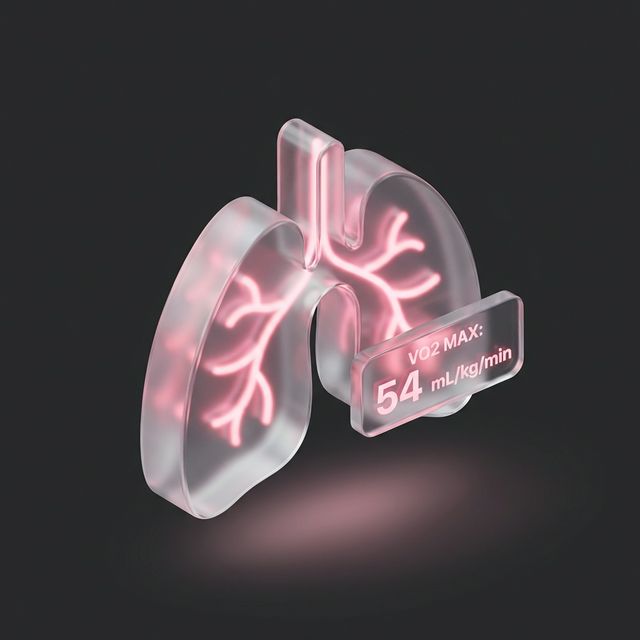
VO2 Max (maximal oxygen uptake) is the maximum rate at which your body can consume oxygen during intense exercise. It is expressed in milliliters of oxygen per kilogram of body weight per minute (mL/kg/min) and is the gold standard measure of cardiorespiratory fitness.
The simple answer: a good VO2 Max for most adults is 40–50 mL/kg/min for men and 35–45 mL/kg/min for women. But the meaningful answer depends on your age, sex, and fitness goals.
VO2 Max Classification Tables (ACSM Standards)
The American College of Sports Medicine (ACSM) provides the most widely cited normative data for VO2 Max classification, derived from large population studies:
Men — VO2 Max Classification (mL/kg/min)
| Age | Very Poor | Poor | Fair | Good | Excellent | Superior |
|---|---|---|---|---|---|---|
| 20–29 | <33 | 33–36 | 37–41 | 42–45 | 46–52 | >52 |
| 30–39 | <31 | 31–34 | 35–38 | 39–43 | 44–50 | >50 |
| 40–49 | <30 | 30–33 | 34–37 | 38–41 | 42–48 | >48 |
| 50–59 | <26 | 26–30 | 31–34 | 35–38 | 39–45 | >45 |
| 60–69 | <20 | 20–25 | 26–29 | 30–33 | 34–40 | >40 |
Women — VO2 Max Classification (mL/kg/min)
| Age | Very Poor | Poor | Fair | Good | Excellent | Superior |
|---|---|---|---|---|---|---|
| 20–29 | <24 | 24–28 | 29–33 | 34–37 | 38–44 | >44 |
| 30–39 | <20 | 20–24 | 25–29 | 30–33 | 34–40 | >40 |
| 40–49 | <17 | 17–21 | 22–26 | 27–31 | 32–38 | >38 |
| 50–59 | <15 | 15–19 | 20–24 | 25–28 | 29–35 | >35 |
| 60–69 | <13 | 13–17 | 18–22 | 23–26 | 27–32 | >32 |
*Source: ACSM's Guidelines for Exercise Testing and Prescription, 11th Edition (2022). American College of Sports Medicine.*
VO2 Max by Sport: Elite Athlete Reference
Elite endurance athletes have VO2 Max values far exceeding the general population, driven by years of high-volume training and favorable genetics:
| Sport / Population | Male Elite | Female Elite |
|---|---|---|
| Cross-country skiers | 80–96 | 60–75 |
| Distance runners (marathon) | 70–85 | 60–72 |
| Cyclists (road, professional) | 75–90 | 60–73 |
| Triathletes (Ironman) | 68–82 | 58–68 |
| Swimmers (distance) | 60–75 | 55–65 |
| Rowers | 65–80 | 58–70 |
| Recreational runner | 45–55 | 38–48 |
| Sedentary adult (30s) | 32–38 | 25–30 |
The highest recorded VO2 Max in history: Norwegian cross-country skier Oskar Svendsen measured 97.5 mL/kg/min at age 18 (2012). Norwegian cyclist Bjørn Dæhlie holds a confirmed 96 mL/kg/min.
Why VO2 Max Matters Beyond Sport
VO2 Max is not just for athletes. It is one of the strongest predictors of all-cause mortality in the general population.
A landmark study from the Cleveland Clinic (Kokkinos et al., 2022, *Journal of the American College of Cardiology*) analyzed 750,000 patients and found:
- Each 1 MET improvement in fitness (~3.5 mL/kg/min) was associated with a 13–15% reduction in mortality risk
- Individuals in the lowest fitness quintile had 4–5× the mortality risk of those in the highest quintile
- The survival benefit of high fitness exceeded that of not smoking, normal blood pressure, or normal cholesterol
In other words: your VO2 Max is one of the most important numbers for your long-term health, regardless of whether you are an athlete.
What VO2 Max Predicts for Race Performance
Your VO2 Max sets the ceiling on endurance performance, but it is not the only determinant. Two athletes with the same VO2 Max can race at very different paces depending on: - Lactate threshold (the fraction of VO2 Max sustainable over race duration) - Running economy (oxygen cost per unit of speed) - Fatigue resistance (ability to maintain pace under accumulating fatigue)
| VO2 Max (mL/kg/min) | Predicted 5K Time (Male) | Marathon Potential (Male) |
|---|---|---|
| 35 | ~32:00 | ~4:45:00 |
| 40 | ~27:30 | ~4:05:00 |
| 45 | ~23:30 | ~3:30:00 |
| 50 | ~20:30 | ~3:05:00 |
| 55 | ~18:00 | ~2:43:00 |
| 60 | ~16:00 | ~2:24:00 |
| 65 | ~14:30 | ~2:09:00 |
| 70 | ~13:10 | ~1:57:00 |
*These predictions assume race-specific training. VO2 Max alone without training specificity will underperform these times.*
How Fast Does VO2 Max Decline With Age?
VO2 Max declines at approximately 1% per year after age 25 in sedentary individuals — a loss of about 0.35 mL/kg/min per year. For physically active individuals, the rate is roughly half that.
The reason: declining maximal heart rate (~1 bpm/year), reduced cardiac stroke volume, and decreased mitochondrial density with inactivity.
The most important finding: This decline is not inevitable. Masters athletes who continue training at moderate-to-high volumes show VO2 Max values 20–30% higher than their sedentary peers at the same age. At 60, a lifelong trained runner may have the VO2 Max of a sedentary 40-year-old.
How to Improve Your VO2 Max
The most effective training protocol for VO2 Max improvement is high-intensity interval training (HIIT) at 90–95% of maximal heart rate.
The Norwegian 4×4 Protocol (Most Studied)
4 intervals of 4 minutes at 90–95% HRmax, with 3-minute active recovery between intervals. Perform 3× per week.
Evidence: Helgerud et al. (2007, *Medicine & Science in Sports & Exercise*) showed this protocol produced an average VO2 Max gain of 7.2 mL/kg/min over 8 weeks — the largest gain per unit time of any studied protocol.
Supplemental Zone 2 Training
High-intensity intervals should not replace aerobic base work — they should complement it. Elite endurance athletes typically spend 80% of training at low intensity (Zone 2 heart rate) to build the mitochondrial density and cardiac stroke volume that underpin VO2 Max.
Practical protocol: 3 Zone 2 sessions per week (30–60 min at 60–70% HRmax) + 1–2 HIIT sessions.
Frequently Asked Questions
Can genetics limit your VO2 Max?
Yes significantly. Twin studies suggest that 40–60% of VO2 Max variance is heritable. This explains why some athletes reach 60 mL/kg/min with moderate training while others struggle to surpass 45 despite years of high-volume work. However, even individuals with low genetic ceiling can meaningfully improve — a 15–20% improvement over baseline is achievable for most people with 3–6 months of structured training.
Does losing weight improve VO2 Max?
Since VO2 Max is expressed per kilogram of body weight, losing fat mass while preserving lean mass mechanically improves relative VO2 Max even without changes to cardiovascular function. A 10% body fat reduction with preserved muscle mass typically produces a 5–8% VO2 Max increase from body composition alone.
What is a good VO2 Max to run a sub-4 hour marathon?
A VO2 Max of approximately 42–46 mL/kg/min (men) or 37–41 mL/kg/min (women) suggests the aerobic capacity for a sub-4 hour marathon. However, this assumes appropriate marathon-specific training (long runs to 32+ km, consistent mileage, fueling practice). Aerobic capacity without specificity will not translate to a sub-4.
How do I test my VO2 Max without a lab?
The Cooper 12-Minute Run Test is the most validated field test: run as far as possible in 12 minutes, then apply: VO2 Max = (Distance in meters − 504.9) ÷ 44.73. The Rockport Walk Test (1-mile walk + heart rate) is a lower-intensity alternative for beginners or older adults. Use our VO2 Max Calculator for instant results.