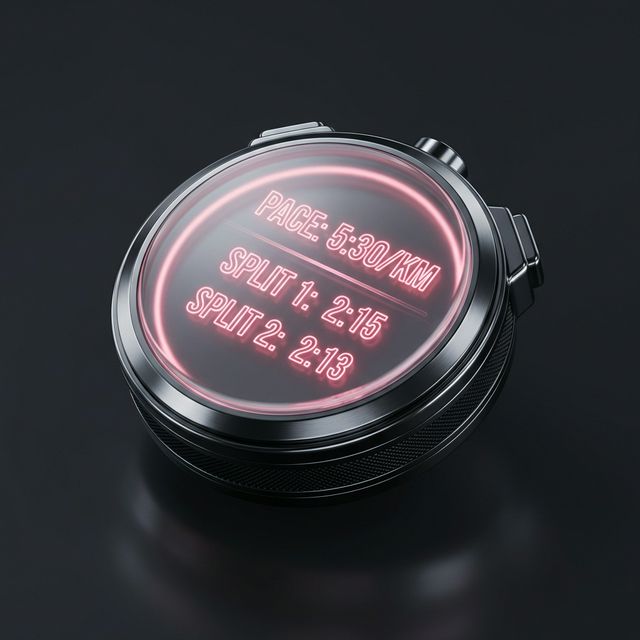
10K in 30min for 50s Men: Pace & Age-Adjusted Plan | Performance Analysis
Expert verified. Men ages 50-59 targeting a 30min 10K? See exact pace (km/mile), age-adjusted VO2 Max context, gender-specific injury risks, and a training plan. Master your fitness with our 10k pace 30 min 50s male analytics.
Specialized Versions
Scientific Methodology & Accuracy
Our tools are built using peer-reviewed research and industry-standard formulas. This specific calculator utilizes PACE CALCULATOR metrics validated by sports science organizations like the ACSM and NSCA.
Gait analysis algorithms can now predict injury risk with high accuracy by identifying subtle asymmetries.
Performance Concept
"Achieving your peak performance requires more than just hard work—it requires precision data."
Expert Protocol
"Periodization of your intensity allows for supercompensation and prevents localized overtraining. Inadequate electrolyte replacement in hot conditions can cause dangerous hyponatremia."
Embed This Tool
<iframe src="https://winsportsus.com/tools/running/10k-pace-30-min-50s-male" width="100%" height="800" frameborder="0" style="border-radius: 12px; box-shadow: 0 4px 6px rgba(0,0,0,0.1);"></iframe>
<div style="font-size: 12px; color: #888; margin-top: 8px; text-align: center;">Powered by <a href="https://winsportsus.com/tools/running/10k-pace-30-min-50s-male" target="_blank" style="color: #F43F5E; text-decoration: none;">WinSportsLab</a> </div>
Want to add this calculator to your own website? Simply copy the code above and paste it into your HTML. It's free!
How to Use This Tool
- 1
Enter your goal race distance and target finish time into the 10K in 30min for 50s Men: Pace & Age-Adjusted Plan.
- 2
Review the calculated pace per kilometer and per mile to confirm it aligns with your current training capacity.
- 3
Cross-reference with your recent long run pace. If the target is 15+ sec/km faster, build gradually over 8–12 weeks.
- 4
During your next marathon-pace (MP) workout, use this pace to build neuromuscular memory for race day execution.
Key Terminology
Frequently Asked Questions
Q1 How accurate is a running pace calculator for marathon planning?
Q2 What pace do I need to run a sub-3 hour marathon?
Q3 How does temperature affect my running pace?
Q4 What is the 10% rule for increasing mileage?
10K in 30min: 50s Men
#### Hormonal & Physiological Context Testosterone levels in men peak in their 50s and 60s, which necessitates a greater emphasis on strength cross-training to preserve muscle mass (sarcopenia prevention).
#### Heart Rate Training Zones Estimated max HR for a 55-year-old man: 165 bpm (Tanaka formula: 208 − 0.7 × age).
For a 30min 10K effort, your race-day heart rate will average approximately 145–155 bpm (88–94% Max HR).
#### VO2 Max Trajectory Male VO2 Max naturally declines ~1.5% per year without structured training. Consistent aerobic training can offset this decline by up to 50%.
#### Age & Gender-Specific Injury Prevention Primary injury risks for male runners in their 50-59: Cartilage degeneration and stress fractures; impact reduction (trail running, elliptical cross-training) is key.
#### Training Adjustments for 50-59 Men Athletes in this demographic achieve the best 10K results by: - Limiting high-intensity sessions to 2 per week - Ensuring 60–72 hours of recovery between hard efforts - Incorporating eccentric strength work (Romanian deadlifts, Nordic curls) 2×/week
#### Required Pace Use the calculator to confirm your exact splits per kilometer and mile for a 30min finish.
Performance Tier Analysis
- A 20-minute 5K runner can realistically target a 3:45–4:00 hour marathon. The Jack Daniels VDOT tables provide validated cross-distance performance predictions.
- Running at 5:00/km requires ~45–50 ml/kg/min VO2. At 4:00/km, that rises to 55–62 ml/kg/min — the territory of competitive age-groupers.
Scientific Verification
Use Cases / Example Scenarios
Use this tool to set your A/B/C goal paces and build a 3-scenario race day execution plan with per-km split cards.
Apply the output to find your lactate threshold pace and design progressive tempo sessions that build sustainable speed.
Input your goal finish time to calculate the exact fueling schedule (km 7, 14, 21, 28, 35) needed to avoid glycogen depletion.
When ambient temperature exceeds 15°C, use the calculated pace to apply a 60-sec/hour slowdown for realistic warm-weather goal-setting.
Related Tools
View All Tools →Half Marathon in 2h 0m for 60s Women: Pace & Age-Adjusted Plan
Physiology-backed Half Marathon pacing guide for female runners ages 60-70. Includes age-graded HR zones, injury risk profile, and a 2h 0m training blueprint.
Is a 275 lb Squat Good for a 215 lb man?
Find out what a 275 lb Squat means for someone weighing 215 lbs. Includes strength level, percentile, and training tips.
Is a 275 lb Squat Good for a 215 lb woman?
Find out what a 275 lb Squat means for someone weighing 215 lbs. Includes strength level, percentile, and training tips.
Is a 275 lb Squat Good for a 220 lb man?
Find out what a 275 lb Squat means for someone weighing 220 lbs. Includes strength level, percentile, and training tips.