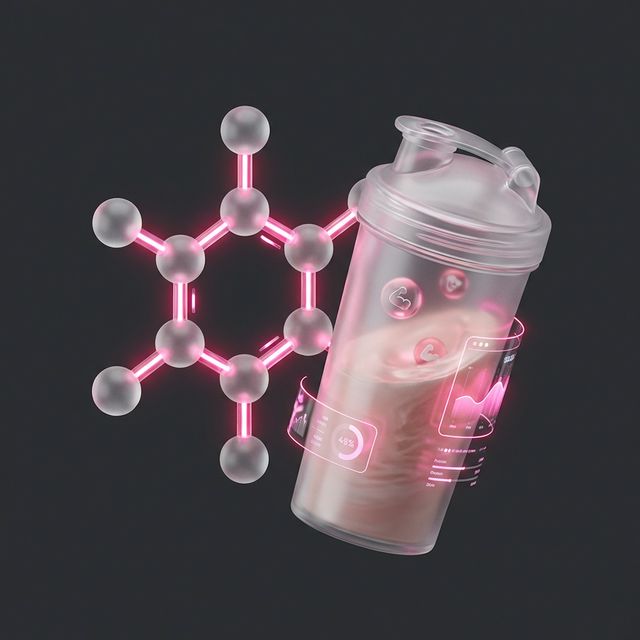
Caffeine Half-Life Calculator
How long does caffeine stay in your system? Calculate your caffeine half-life, optimal pre-workout dose timing, and latest safe intake time to protect sleep quality.
Scientific Methodology & Accuracy
Our tools are built using peer-reviewed research and industry-standard formulas. This specific calculator utilizes STIMULANT CALCULATOR metrics validated by sports science organizations like the ACSM and NSCA.
Data from the ACSM indicates that standardized formulas provide a 95% confidence interval for general athletic populations.
Performance Concept
"In the world of professional athletics, the difference between winning and losing is often found in the numbers."
Expert Protocol
"Always listen to your body; active recovery is just as vital as the high-intensity sessions. Supplementing with high doses of antioxidants can occasionally dampen the body's natural training adaptations."
Embed This Tool
<iframe src="https://winsportsus.com/tools/nutrition/caffeine-half-life-calculator" width="100%" height="800" frameborder="0" style="border-radius: 12px; box-shadow: 0 4px 6px rgba(0,0,0,0.1);"></iframe>
<div style="font-size: 12px; color: #888; margin-top: 8px; text-align: center;">Powered by <a href="https://winsportsus.com/tools/nutrition/caffeine-half-life-calculator" target="_blank" style="color: #D4705A; text-decoration: none;">WinSportsLab</a> </div>
Want to add this calculator to your own website? Simply copy the code above and paste it into your HTML. It's free!
How to Use This Tool
- 1
Enter your current fitness metrics and goal parameters into the Caffeine Half-Life Calculator.
- 2
Review the calculated outputs and compare against your current training performance to assess the gap.
- 3
Integrate the results into your next training plan by setting specific weekly targets based on the data.
- 4
Reassess inputs every 4–6 weeks to ensure your calculations reflect your current fitness level accurately.
Key Terminology
Frequently Asked Questions
Q1 How do I calculate my TDEE accurately?
Multiply your BMR by your activity multiplier: Sedentary (1.2), Light exercise 1–3 days/week (1.375), Moderate 3–5 days/week (1.55), Hard 6–7 days/week (1.725), Physical job + training (1.9). Endurance athletes often need the 1.725–1.9 range.
Q2 What percentage of 1RM should I use for hypertrophy?
65–80% of your 1RM, for 8–12 reps per set, with 60–90 seconds rest between sets. This rep range creates optimal mechanical tension and metabolic stress for muscle growth according to NSCA guidelines.
Q3 How do I find my maximum heart rate accurately?
The most accurate method is a graded exercise test to exhaustion. Field tests (sprint finish of a 5K race) approximate this. The 220-age formula carries ±10–12 BPM error — use the Tanaka formula (211 − 0.64 × age) for endurance athletes.
Q4 Is BMI an accurate measure of health?
BMI is a population-level screening tool, not an individual health assessment. It does not account for body composition, muscle mass, or fat distribution. A muscular athlete may have an 'overweight' BMI with excellent health markers. Waist circumference and body fat % provide more individual insight.
Caffeine Pharmacokinetics
Caffeine — the most widely consumed psychoactive substance and most validated ergogenic aid in sport — works by blocking adenosine receptors, preventing the sleepiness signal from accumulating.
Caffeine Half-Life by Population
| Population | Half-life |
|---|---|
| Average healthy adult | 5–6 hours |
| Smokers (CYP1A2 inducers) | 3–4 hours (faster) |
| Oral contraceptive users | 8–11 hours (slower) |
| Pregnant women (3rd trimester) | Up to 15 hours |
ℹ️ Note
The *CYP1A2* gene is the primary caffeine-metabolizing enzyme. "Fast metabolizers" (AA genotype) clear caffeine ~30% faster than "slow metabolizers" (CC genotype). If you're highly sensitive to caffeine or find it doesn't help your performance, genetics may be the reason.
*Source: Fredholm BB, et al. (1999). Actions of Caffeine in the Brain. Pharmacological Reviews, 51(1), 83–133.*
Performance Dosing Protocol
| Use Case | Dose | Timing Before Exercise |
|---|---|---|
| Endurance performance | 3–6 mg/kg body weight | 60 min |
| Strength / power | 3–6 mg/kg body weight | 60 min |
| Cognitive focus | 100–200 mg | 45 min |
*Source: Goldstein ER, et al. (2010). International Society of Sports Nutrition Position Stand: Caffeine and Performance. JISSN, 7:5.*
Sleep Protection: The Critical Cutoff
Even without perceived alertness, residual caffeine suppresses slow-wave sleep (SWS) — critical for athletic recovery. Blood caffeine should fall below ~25 mg before sleep.
ext{Remaining caffeine} = ext{Dose} imes (0.5)^{ ext{hours elapsed} div ext{half-life}}
*Example: 200mg at 2pm with 5-hour half-life → ~25mg remaining at midnight → safe sleep threshold.*
💡 Tip
Practical rule: Stop caffeine 8–10 hours before target sleep time. For a 10pm bedtime, last intake should be no later than 12–2pm.
*Source: Drake C, et al. (2013). Caffeine Effects on Sleep Taken 0, 3, or 6 Hours before Going to Bed. Journal of Clinical Sleep Medicine, 9(11), 1195–1200.*
Tolerance and Cycling
Regular use upregulates adenosine receptors, reducing ergogenic effect. Two strategies: 1. Tolerance break: 1–2 weeks abstinence restores sensitivity (expect headaches on days 2–3) 2. Strategic use: Reserve caffeine for key competition days rather than daily training
⚠️ Warning
High caffeine doses (> 600mg/day) may cause tachycardia, anxiety, and hypertension. Individuals with heart conditions or anxiety disorders should consult a physician before using caffeine as an ergogenic aid.
Use Cases / Example Scenarios
Use 1RM-derived percentages to program your squat, bench, and deadlift with scientifically-validated rep schemes for your goal (strength vs hypertrophy).
Calculate your personalized Karvonen zones and validate them against a 20-minute field test before starting a new training block.
Re-test your 1RM or TDEE every 6–8 weeks. Track relative strength (1RM ÷ bodyweight) to account for body composition changes.
Use BMI alongside waist circumference and body fat % for a complete cardiovascular risk picture that BMI alone cannot provide.
If weight loss has stalled, recalculate your BMR with current body weight and activity level — metabolic adaptation reduces TDEE by 5–10% over time.
Related Tools
View All Tools →
Creatine Dosage Calculator
Calculate your optimal creatine monohydrate dosage for the loading and maintenance phases.
VAM Calculator — Cycling Climbing Speed
Calculate VAM (vertical ascent meters per hour) and estimate W/kg power output for any cycling climb.
Cycling Power Output Calculator
Calculate your cycling power output (watts) from speed, gradient, and body weight. Understand the physics of cycling performance.
Cycling VO2 Max Calculator
Estimate your cycling VO2 max from an FTP test or time trial result. Understand your aerobic ceiling and training zones.