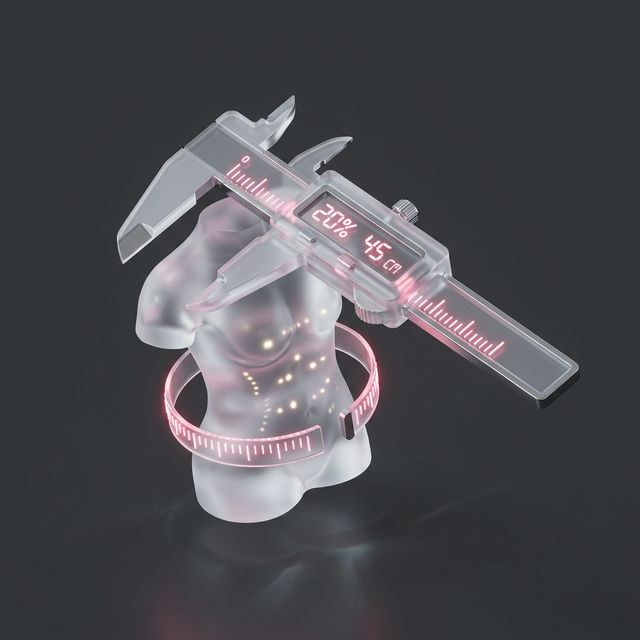
Waist-to-Hip Ratio Calculator
WHR is a better predictor of heart disease than BMI. Calculate your waist-to-hip ratio to understand your visceral fat risk.
Basic Info
Body Measurements (Optional — unlocks Body Fat & WHR)
Energy Expenditure
Weight Analysis
Body Composition
BMI Categories (WHO Standard)
| Category | BMI Range | Health Risk |
|---|---|---|
| Underweight | < 18.5 | Moderate |
| Normal Weight | 18.5 - 24.9 | Low |
| Overweight | 25.0 - 29.9 | Increased |
| Obesity I | 30.0 - 34.9 | High |
| Obesity II | 35.0 - 39.9 | Very High |
Specialized Versions


Scientific Methodology & Accuracy
Our tools are built using peer-reviewed research and industry-standard formulas. This specific calculator utilizes BMR CALCULATOR metrics validated by sports science organizations like the ACSM and NSCA.
The IOC consensus statements provide the most broadly accepted guidelines for nutrition and supplement use.
Performance Concept
"The leap from amateur to elite is often a matter of mastering the minor details revealed by data."
Expert Protocol
"Utilize contrast water therapy to accelerate the removal of metabolic byproducts after high-intensity blocks. Extreme environments (heat/altitude) significantly alter your physiological baselines; adjust your targets accordingly."
Embed This Tool
<iframe src="https://winsportsus.com/tools/health/waist-to-hip-ratio-calculator" width="100%" height="800" frameborder="0" style="border-radius: 12px; box-shadow: 0 4px 6px rgba(0,0,0,0.1);"></iframe>
<div style="font-size: 12px; color: #888; margin-top: 8px; text-align: center;">Powered by <a href="https://winsportsus.com/tools/health/waist-to-hip-ratio-calculator" target="_blank" style="color: #D4705A; text-decoration: none;">WinSportsLab</a> </div>
Want to add this calculator to your own website? Simply copy the code above and paste it into your HTML. It's free!
How to Use This Tool
- 1
Enter your current fitness metrics and goal parameters into the Waist-to-Hip Ratio Calculator.
- 2
Review the calculated outputs and compare against your current training performance to assess the gap.
- 3
Integrate the results into your next training plan by setting specific weekly targets based on the data.
- 4
Reassess inputs every 4–6 weeks to ensure your calculations reflect your current fitness level accurately.
Key Terminology
Frequently Asked Questions
Q1 Which BMR formula is most accurate?
The Mifflin-St Jeor equation is validated as the most accurate for the general population (within 10% for ~82% of people). The Harris-Benedict equation is slightly less accurate due to its older dataset. Neither accounts for body composition — leaner individuals have higher actual BMR than predicted.
Q2 How do I calculate my TDEE accurately?
Multiply your BMR by your activity multiplier: Sedentary (1.2), Light exercise 1–3 days/week (1.375), Moderate 3–5 days/week (1.55), Hard 6–7 days/week (1.725), Physical job + training (1.9). Endurance athletes often need the 1.725–1.9 range.
Q3 What percentage of 1RM should I use for hypertrophy?
65–80% of your 1RM, for 8–12 reps per set, with 60–90 seconds rest between sets. This rep range creates optimal mechanical tension and metabolic stress for muscle growth according to NSCA guidelines.
Q4 How do I find my maximum heart rate accurately?
The most accurate method is a graded exercise test to exhaustion. Field tests (sprint finish of a 5K race) approximate this. The 220-age formula carries ±10–12 BPM error — use the Tanaka formula (211 − 0.64 × age) for endurance athletes.
Why Waist-to-Hip Ratio Matters More Than BMI Alone
The Waist-to-Hip Ratio (WHR) measures fat distribution, not just total mass. Where fat is stored is as important as how much fat is stored. Abdominal (visceral) fat — the fat that accumulates around internal organs — is metabolically active, releasing inflammatory cytokines and free fatty acids that disrupt insulin signaling and promote cardiovascular disease. Hip and thigh fat (subcutaneous) is comparatively inert and less pathogenic.
A landmark meta-analysis of 52 countries (INTERHEART study, Yusuf et al., 2005, *The Lancet*) found that WHR was a stronger predictor of heart attack risk than BMI across all ethnic groups and both sexes. Two people with identical BMIs can have dramatically different cardiovascular risk profiles based on where they carry their weight.
WHO Risk Thresholds
| Risk Category | Men | Women |
|---|---|---|
| Low Risk ("Pear") | < 0.90 | < 0.80 |
| Moderate Risk | 0.90 – 0.99 | 0.80 – 0.85 |
| High Risk ("Apple") | ≥ 1.00 | ≥ 0.86 |
*Source: World Health Organization (2008). Waist Circumference and Waist-Hip Ratio: Report of a WHO Expert Consultation.*
How to Measure Correctly
Waist measurement: - Stand upright, exhale naturally (do not suck in) - Place the tape at the narrowest point of the torso, typically midway between the bottom rib and the top of the hip bone (iliac crest) - If no natural narrowing is visible, measure at the navel level
Hip measurement: - Place the tape at the widest point of the buttocks and hips - Keep the tape level and parallel to the floor
Measure both three times and average the results for accuracy.
Waist Circumference: A Standalone Risk Marker
Waist circumference alone is also a validated cardiovascular risk marker: - High Risk: Men > 102 cm (40 in) / Women > 88 cm (35 in) - Substantially Elevated Risk: Men > 88 cm (35 in) / Women > 80 cm (31 in)
*Source: National Institutes of Health (2000). The Practical Guide: Identification, Evaluation, and Treatment of Overweight and Obesity in Adults.*
What Reduces Visceral Fat Most Effectively?
Research consistently shows that aerobic exercise is more effective at reducing visceral fat than resistance training, even when the caloric expenditure is matched (Ismail et al., 2012, *Obesity Reviews*). Combining both produces the greatest effect. Dietary strategies: reducing ultra-processed foods and refined carbohydrates is strongly associated with visceral fat reduction, independent of total calorie intake.
Use Cases / Example Scenarios
Re-test your 1RM or TDEE every 6–8 weeks. Track relative strength (1RM ÷ bodyweight) to account for body composition changes.
Use BMI alongside waist circumference and body fat % for a complete cardiovascular risk picture that BMI alone cannot provide.
If weight loss has stalled, recalculate your BMR with current body weight and activity level — metabolic adaptation reduces TDEE by 5–10% over time.
Calculate your TDEE and set a 15–20% caloric deficit to trigger fat loss while preserving lean muscle mass.
Use 1RM-derived percentages to program your squat, bench, and deadlift with scientifically-validated rep schemes for your goal (strength vs hypertrophy).
Related Guides
Related Tools
View All Tools →
Deadlift Calculator
Calculate your deadlift one-rep max from any working set. Includes strength standards, technique cues, and training percentages.
Training Pace Calculator
Input any distance and time to calculate your pace per km/mile, speed, and splits.

Marathon Pace Calculator
Calculate your marathon finish time and average pace per mile/km.
Half Marathon Pace Calculator
Plan your race pace for 13.1 miles. The perfect balance of speed and endurance.